It is late 2025, and the hangover has officially set in.
If you rewind the tape to 2021, the automotive industry was tripping on a cocktail of zero-interest rates, SPAC money, and PowerPoint slides promising a Jetsons-like future by the middle of the decade. We were told that by now, you’d be cross-shopping five different $30,000 electric crossovers, the charging network would be as ubiquitous as Starbucks, and the internal combustion engine would be gasping its last, smoggy breath. Wall Street valued Rivian higher than Ford before they had built enough trucks to fill a Costco parking lot.
Well, look around. The revolution didn’t just hit a speed bump; it drove straight into a pothole the size of a crater.
That isn’t to say the electric vehicle is dead. Far from it. In fact, if you cut through the noise, the doom-mongering from bearish analysts, and the victory laps from the “I told you so” V8 diehards, you find a market that is finally, painfully, maturing. We are seeing millions of EVs on American roads. The Tesla Model Y is still one of the best-selling cars on the planet. But the “up and to the right” exponential growth curve has flattened into a jagged plateau, and the industry is currently nursing a headache that no amount of PR spin can cure.
This is the state of the union for the electric car in America. It’s messy, it’s political, it’s frustrating, and for the first time in a long time, it’s incredibly real.
The great sales plateau and the dealer revolt
Let’s start with the numbers, because they tell a story that the headlines usually miss. For the last 12 months, we’ve been hearing about the “EV crash.” That is hyperbole. What we are seeing is a brutal inventory correction.
In 2025, electric vehicles are hovering around 11 to 12 percent of the new vehicle market share in the United States. That is a massive number compared to five years ago, but it is well short of the 20-plus percent targets many automakers set for themselves. The early adopters—the tech bros, the environmentalists, and the people who just wanted to launch 0-60 in three seconds—have all bought their cars. Now, automakers are staring down the barrel of the “early majority,” and the early majority is a much tougher crowd.
These buyers don’t care about saving the polar bears; they care about monthly payments. And right now, the math is tough. With interest rates refusing to return to the basement and the average transaction price of an EV still hovering north of $50,000 (despite aggressive price cuts), the value proposition is murky for the average family in Ohio.
Compounding this is the dealer network. Walking into a legacy dealership right now is a study in friction. Many dealers, having been forced to spend hundreds of thousands of dollars on forklift upgrades and chargers, are staring at lots full of Mach-Es or Blazers that are sitting for 90 days or more. Salespeople, who live and die by volume, are steering customers back toward the gas cars they know how to sell in their sleep. They don’t want to spend 45 minutes explaining how kilowatt-hours work or why the estimated range drops when it’s cold. They want to move metal.
The revenge of the hybrid
This hesitation has birthed the biggest plot twist of the year: the revenge of the hybrid.
Toyota, the company that was dragged over the coals by environmental groups and tech blogs for “lagging” on EVs, is currently laughing all the way to the bank. Akio Toyoda’s insistence on a “multi-pathway” approach—arguing that not everyone is ready for a plug-in—has been vindicated by the market.
The Prius, the RAV4 Hybrid, and the new hybridized Camry are flying off lots with effectively zero days of supply. While Ford and GM are scrambling to reintroduce hybrid powertrains into lineups they had previously committed to going “all electric,” Toyota is sitting pretty. It turns out that Americans want electrification; they just don’t want the tether. They want 50 mpg, the torque fill of an electric motor, and the ability to drive 600 miles without downloading three different apps to find a working plug.
We are also seeing a resurgence of the Plug-in Hybrid (PHEV), a technology that EV purists tried to kill off years ago. The argument was that PHEVs were a “worst of both worlds” compromise—heavy, complex, and carrying around two powertrains. In reality, for the American suburbanite, it is the “best of both worlds” solution. The ability to do the daily commute of 30 miles on pure electrons and then drive to the Grand Canyon on gas without range anxiety is a killer app. The challenge now is that automakers stopped developing engines for these cars three years ago, and restarting that R&D machine takes time they don’t have.
The infrastructure purgatory: welcome to the dongle life
If there is one single reason why the average American is still terrified of buying an EV, it isn’t the price. It’s the public charging network. And in 2025, we are in the middle of an awkward, hardware-induced purgatory.
We are currently living through the “Dongle Era.”
Over the last two years, the entire industry capitulated and admitted that Tesla was right. The North American Charging Standard (NACS)—Tesla’s slim, elegant plug—won the war against the clunky, fragile Combined Charging System (CCS). Ford, GM, Rivian, Volvo, and just about everyone else signed the treaty.
But signing a piece of paper is different from actually changing the hardware on an assembly line.
Right now, if you walk into a Ford or Chevy dealership, you might still find cars with the old CCS ports. To use a Tesla Supercharger—the only network that reliably works—you need an adapter. And getting your hands on one of those official adapters has been a saga in itself, with supply chain delays turning them into golden tickets.
Meanwhile, the “native” NACS cars are just now starting to trickle out in volume for the 2026 model year. We are in a transition period that is confusing as hell for the consumer. You have legacy CCS chargers that are falling into disrepair because the networks (like Electrify America) know the tech is obsolete, and you have Tesla Superchargers that are suddenly flooded with F-150 Lightnings taking up two spots because their charge ports are in the wrong place.
It is a mess. It will get better, eventually. But right now, the dream of “plug and play” is more like “plug, wait, error code, plug again, wiggle the adapter, pray.”
Detroit’s identity crisis
No one is having a harder time navigating this new reality than the Big Three. They bet the farm, and the farm is currently underwater.
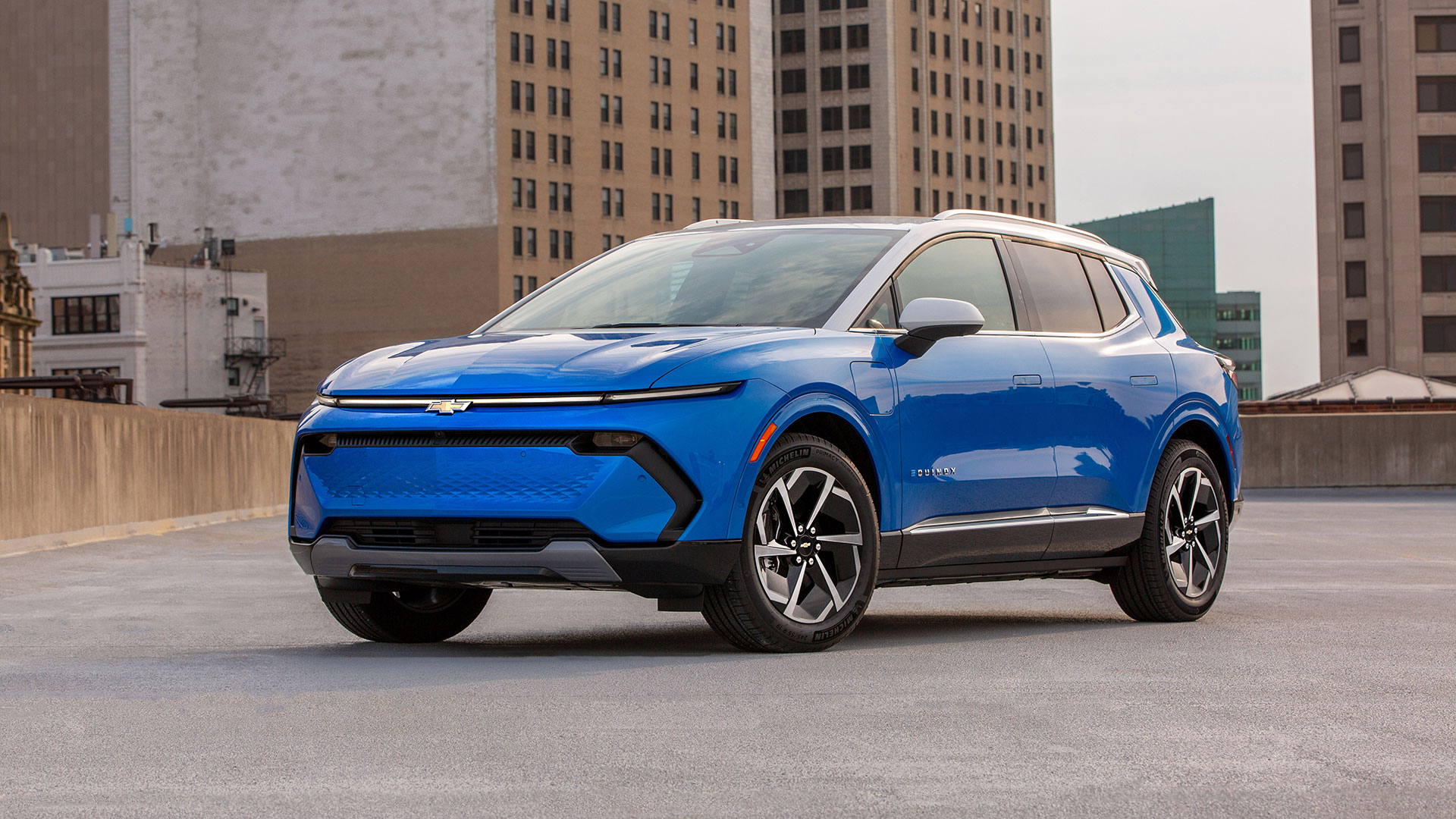
General Motors has spent the last year trying to dig itself out of a software hole. Their Ultium platform, which was supposed to be the modular savior of American manufacturing, had a launch that can only be described as a face-plant. The Blazer EV and Lyriq were plagued with software gremlins that left cars bricked and owners stranded. To their credit, GM seems to have turned a corner in late 2025. The Equinox EV is finally on sale, and it is actually… good? It’s a normal car, with a normal range, at a somewhat normal price. It might be the most important car GM makes right now, simply because it proves they can actually build these things without the wheels falling off.
But GM made a dangerous bet by killing Apple CarPlay and Android Auto in favor of its own Google-based system. It’s a bold move to look at your smartphone-addicted customer base and say, “No, trust us, our software is better.” Spoiler alert: It usually isn’t, and buyers are voting with their feet.
Ford, on the other hand, has blinked. Jim Farley, who was once pushing the “Model e” division with the zeal of a convert, has tapped the brakes. The F-150 Lightning is a fantastic truck, but demand for electric pickups has proven to be softer than expected. It turns out that towing a boat with an EV is a miserable experience involving stopping every 90 miles to charge. Ford is now pivoting hard back to hybrids, canceling big three-row electric SUVs, and focusing on a secretive “skunkworks” project in California to build a cheap, small EV platform to fight China.
And then there is Stellantis (Jeep, Ram, Dodge), which showed up to the party late, drunk, and wearing a “V8 Forever” t-shirt. They are finally launching the electric Ram 1500 REV and the Charger Daytona, but they are hedging their bets with “range-extender” gas generators. Honestly? It might be the smartest play on the board. They skipped the bleeding edge and might just catch the market right as it settles into a pragmatic middle ground.
The startup graveyard and the survivors
Remember the SPAC boom? Remember when Lordstown Motors was going to save Ohio, and Fisker was going to be the next Apple?
Lordstown is gone. Fisker is gone (again). Canoo is on life support. The herd has been culled.
Rivian remains the standout survivor, but even they are walking a tightrope. The R1T and R1S are beloved by their owners—they are genuinely excellent vehicles that capture the “adventure lifestyle” vibe perfectly. But Rivian is still burning cash. The launch of the smaller, cheaper R2 and R3 platforms is their “do or die” moment. If they can survive long enough to get those cars to market in volume, they might just become the next major American automaker. If not, they are a prime acquisition target for a legacy brand desperate for software that actually works.
Lucid Motors occupies a strange space. The Lucid Air is, from an engineering standpoint, the best electric car in the world. Its efficiency, range, and packaging are miracles of physics. But nobody is buying them. They are too expensive, the brand cachet isn’t there, and they are competing in a sedan market that is shrinking every year. They are currently surviving largely on the bottomless pockets of the Saudi PIF.
The Korean juggernaut
While Detroit flails and the startups burn cash, the Hyundai Motor Group (Hyundai, Kia, Genesis) is quietly eating everyone’s lunch.
If you want to know what the current state of the art looks like, go drive a Kia EV9 or the updated Hyundai Ioniq 5. They charge faster than almost anything else thanks to their 800-volt architecture, they look like spaceships, and—crucially—they have physical buttons for the climate control.
The Koreans have cracked the code: build cool cars that happen to be electric, rather than “electric cars” that feel like science projects. They have navigated the manufacturing issues better than anyone, setting up shop in Georgia to qualify for tax credits, and their reliability is miles ahead of the domestic brands. They are the new Honda and Toyota of the EV age, delivering high value and solid tech without the drama.
The shadow of China
Looming over all of this is the specter of China. It is the elephant in the room that every executive is terrified of.
BYD, Geely, and Xiaomi are building EVs that are cheaper, better built, and more advanced than what the West is producing. The BYD Seagull, a sub-$12,000 EV sold in other markets, keeps Detroit executives awake at night. It is a perfectly usable city car with decent range and interior quality that embarrasses cars costing three times as much.
The only thing stopping these cars from flooding American streets is a massive tariff wall erected by Washington. The 100% tariff on Chinese EVs has bought the US auto industry time, but it has also created a distorted market. We are an island of expensive EVs. Without the pressure of cheap Chinese competition, US automakers have been slow to lower prices.
We are in a protectionist bubble. While the rest of the world gets affordable electric mobility, Americans are stuck choosing between a $50,000 crossover or a used Bolt. It’s a sustainable strategy for saving Union jobs, perhaps, but it’s a terrible strategy for mass EV adoption.
The Tesla factor
You cannot talk about EVs without talking about the 800-pound gorilla.
Tesla is still the king. The Model Y is the default choice for anyone who just wants an appliance that works. But the armor is cracking. Elon Musk’s public persona has alienated a significant chunk of the liberal buyer base that made Tesla what it is. For the first time, we are seeing “brand avoidance” show up in the data. People are buying Rivians or Hyundais specifically because they don’t want to be associated with the guy running X (formerly Twitter).
More importantly, the cars are getting old. The Model 3 got a nice refresh (“Highland”), but the Model Y is aging, and the Models S and X are ancient in car years.
And then there is the Cybertruck.
The Cybertruck was supposed to be the halo vehicle, the Blade Runner dream. In reality, it has become a polarizing cultural artifact. It attracts attention, sure, but it hasn’t revolutionized the truck market. It’s an expensive toy for influencers, plagued by build quality issues and a price tag that drifted way up from the promised $40,000. It sucks the air out of the room, distracting Tesla from what they really need: the mythical “Model 2” affordable car. Tesla is no longer a growth startup; it is a legacy automaker dealing with legacy problems—stagnant lineups, inventory pileups, and a CEO who is distracted by everything from rockets to social media wars.
The ownership experience: Tires and insurance
Here is something the brochures don’t mention: the hidden costs of EV ownership are starting to bite.
First, tires. EVs are heavy, and they produce instant torque. That combination shreds rubber. Owners who are used to getting 40,000 to 50,000 miles out of a set of Michelins are shocked when their EV needs new shoes at 18,000 miles. And because these are specialized, low-rolling-resistance tires with foam inserts for noise reduction, they aren’t cheap. A set of tires for a Rivian or a Model X can easily run $1,500 to $2,000.
Then there is insurance. Insurers have realized that EVs are easily “totaled.” A minor fender bender that damages the battery pack casing can result in a total loss because there is no way to repair it safely or cheaply. Repair times are longer, parts are scarcer, and labor rates for certified EV techs are higher. As a result, premiums for EVs have spiked in 2024 and 2025, eroding some of the “gas savings” math that buyers were counting on.
The used market: The real golden age
If this all sounds depressing, there is a silver lining. A massive, shining silver lining for you, the consumer.
The used EV market is the best deal in the automotive world right now.
Because of the aggressive price cuts on new models and the general fear of battery degradation (which, by the way, is largely overblown—modern batteries are outlasting the cars), used EV values have plummeted. You can pick up a lightly used Model 3, a Mustang Mach-E, or a Polestar 2 for pennies on the dollar compared to their original MSRPs.
We are seeing 2-year-old EVs with 20,000 miles selling for $25,000. These are modern, high-tech, fast, capable cars that are depreciating like Maseratis. For the savvy buyer who can charge at home, this is the golden ticket. You can let the first owner eat the $20,000 depreciation hit and drive a car that feels brand new. This crash in used values is bad for automakers and leasing companies, but it is exactly what the market needs to democratize access. The affordable EV revolution isn’t coming from a new factory; it’s coming from the used car lot.
The political football
We have to touch on the politics, because in America, everything is political. The electric car has, unfortunately, been drafted into the culture war.
Depending on who you watch on cable news, the EV is either the savior of humanity or a woke conspiracy to destroy American freedom. This polarization is exhausting, and it’s hurting adoption. We are seeing a divide opening up: “Blue” states are seeing adoption rates climb past 20 or 30 percent, while “Red” states are lagging significantly.
The wavering fate of federal tax credits has only added to the volatility. The industry spent 2024 rushing to onshore battery production to qualify for the Inflation Reduction Act credits, only to have the political winds shift again. This regulatory whiplash makes it impossible for product planners to do their jobs. How do you plan a vehicle cycle for 2030 when you don’t know if the government will be subsidizing it, taxing it, or banning the software inside it?
Conclusion: the morning after
So, where does that leave us?
The electric vehicle in America is in its “Morning After” phase. The party was wild, the promises were huge, and now the lights are on, and we have to clean up the mess.
The “inevitability” of an all-electric future is being questioned. The timeline has slipped. We are likely looking at a future that is much more mixed than we thought—a blend of pure EVs, plug-in hybrids, and highly efficient gas engines coexisting for decades. The ICE isn’t dead; it’s just moving into a retirement home where it will only work part-time assisting batteries.
But make no mistake: the electric car is here to stay. The technology is simply too good to abandon. The instant torque, the low running costs, the silence—once you live with it, it’s hard to go back to a vibrating, shifting, gas-smelling ICE car for your daily commute.
The winners of the next five years won’t be the ones with the wildest promises or the coolest CEO. They will be the ones who can build a reliable, affordable car, fix the charging experience, and treat the customer like a human being rather than a beta tester.
The hype is dead. Long live the car.