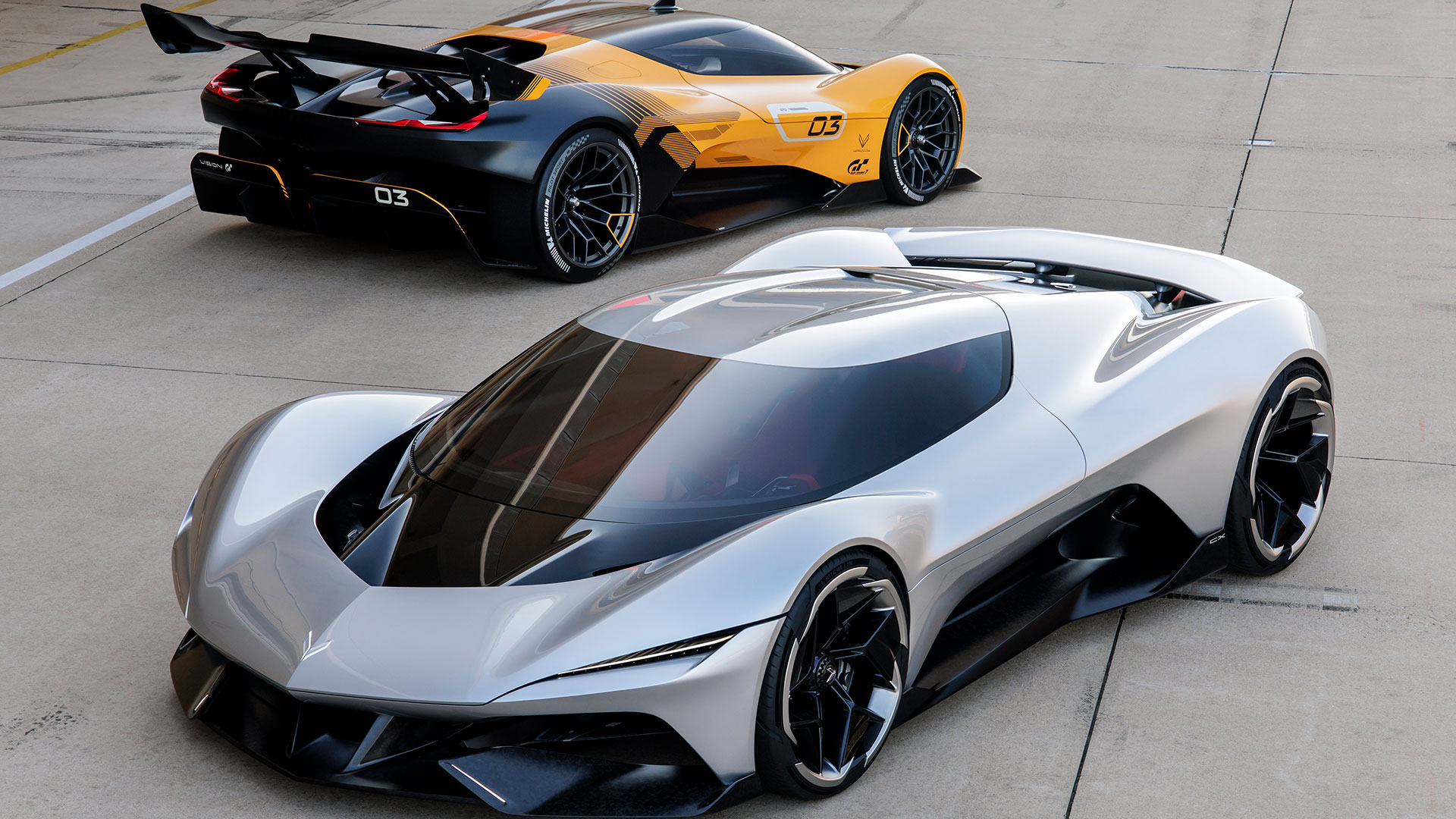
Chevrolet used The Quail, a Motorsports Gathering, to pull the covers off two forward-looking Corvette concepts, the street-leaning Corvette CX and the competition-focused CX.R Vision Gran Turismo. Neither is slated for production, yet both are intended to steer Corvette design for years to come, tying seven decades of heritage to emerging performance tech.
Developed and built at the Chevrolet Performance Studio in Warren, Michigan, the pair capped a yearlong internal design exercise that spanned several GM studios. Executive design director Phil Zak said the brief was to ignore production constraints, explore proportion and surfacing, and crystallize a design direction that remains unmistakably Corvette.
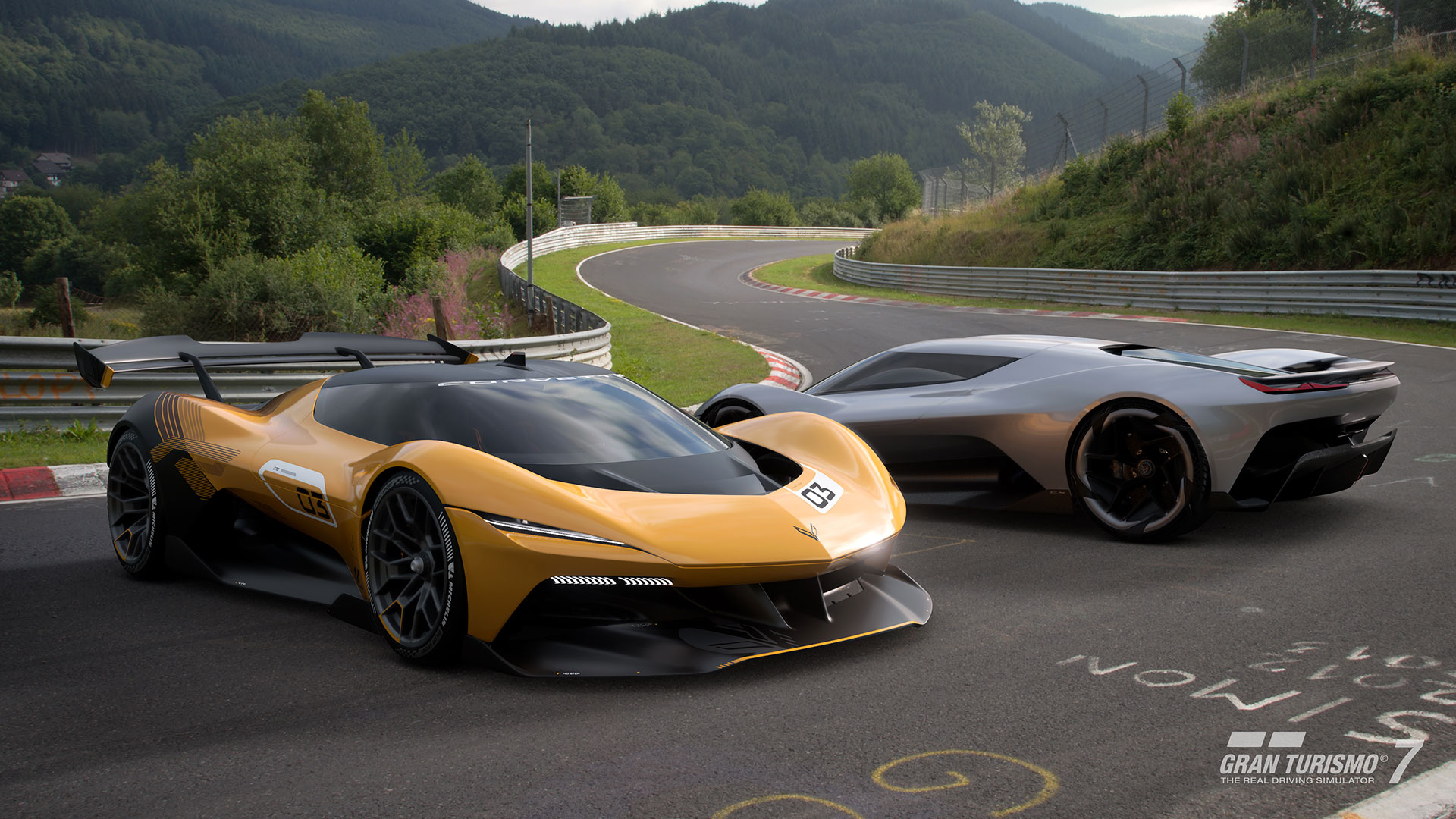
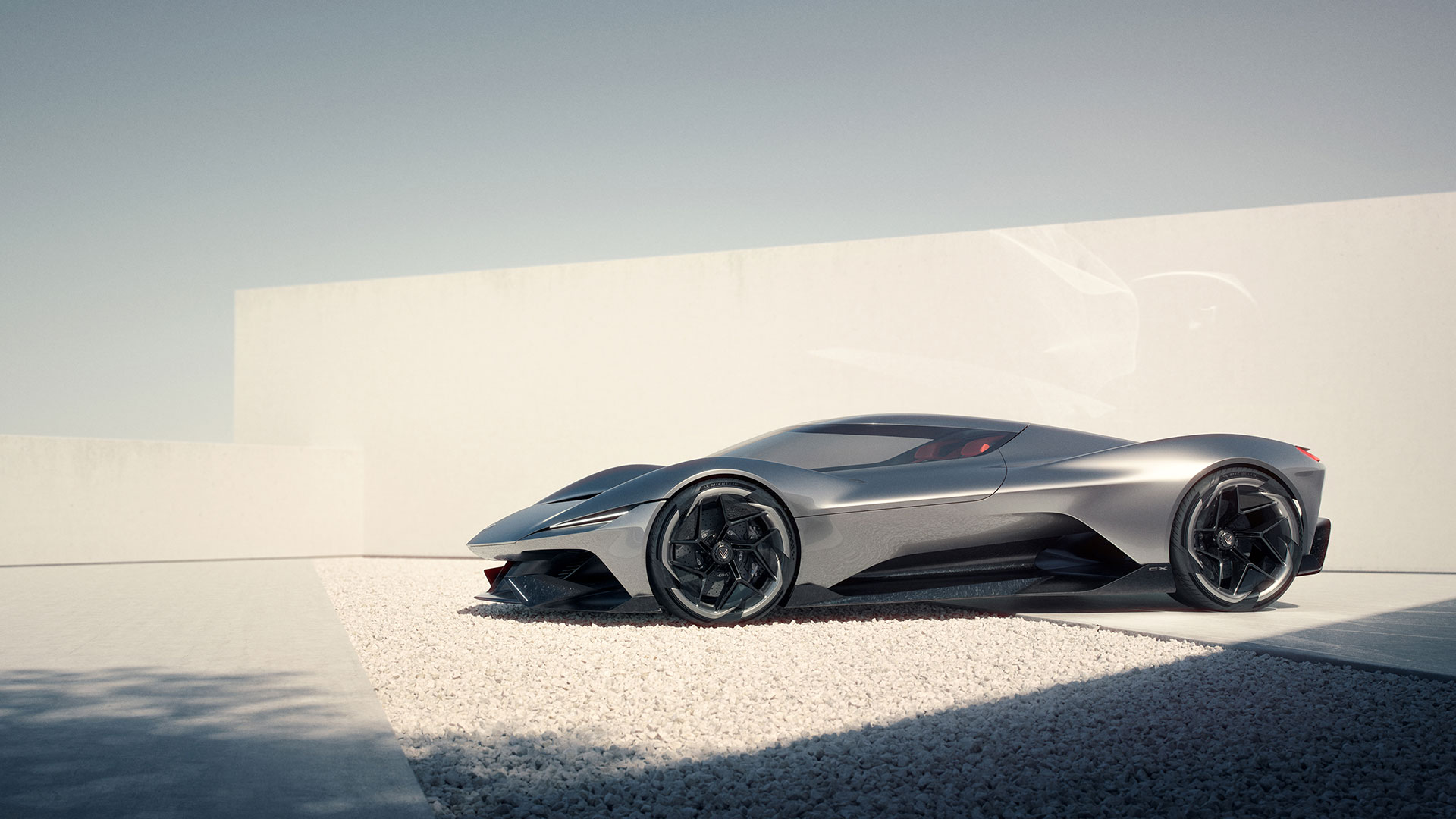
The CX concept imagines a low, long, sleek Corvette for road and track, with a canopy cockpit, a forward-lunging nose, and signature dual-element taillamps. Its shape was refined with GM Motorsports’ aero group, and its underbody reveals the intent: a vacuum fan system that pulls air through open channels, builds significant downforce, and works with active front and rear elements to balance the car in real time.
Powertrain details underscore the clean-sheet approach. The CX is envisioned as an all-wheel-drive electric supercar with four motors, one at each wheel, delivering more than 2,000 horsepower and four-corner torque vectoring. A 90-kWh battery is packaged low in the chassis to aid center of gravity and weight distribution, matching the aero hardware’s focus on cornering performance.
Inside, the CX wraps the driver in an Inferno Red cockpit trimmed in silicone leather, milled aluminum, and low-gloss forged carbon. A forward-opening canopy greets occupants, while a digital windscreen projects performance data across the glass. Primary controls are integrated into the steering wheel to keep attention forward.
If the CX sketches a roadgoing future, the CX.R Vision Gran Turismo pushes the idea to the pit lane. Wearing a familiar yellow and black scheme that nods to Corvette’s GT racecars, the CX.R drops weight, lowers its ride height, and adds more aggressive active aero. The cabin trades touring finishes for exposed carbon, suede-wrapped grip zones, and heavily bolstered seats designed for high lateral loads.
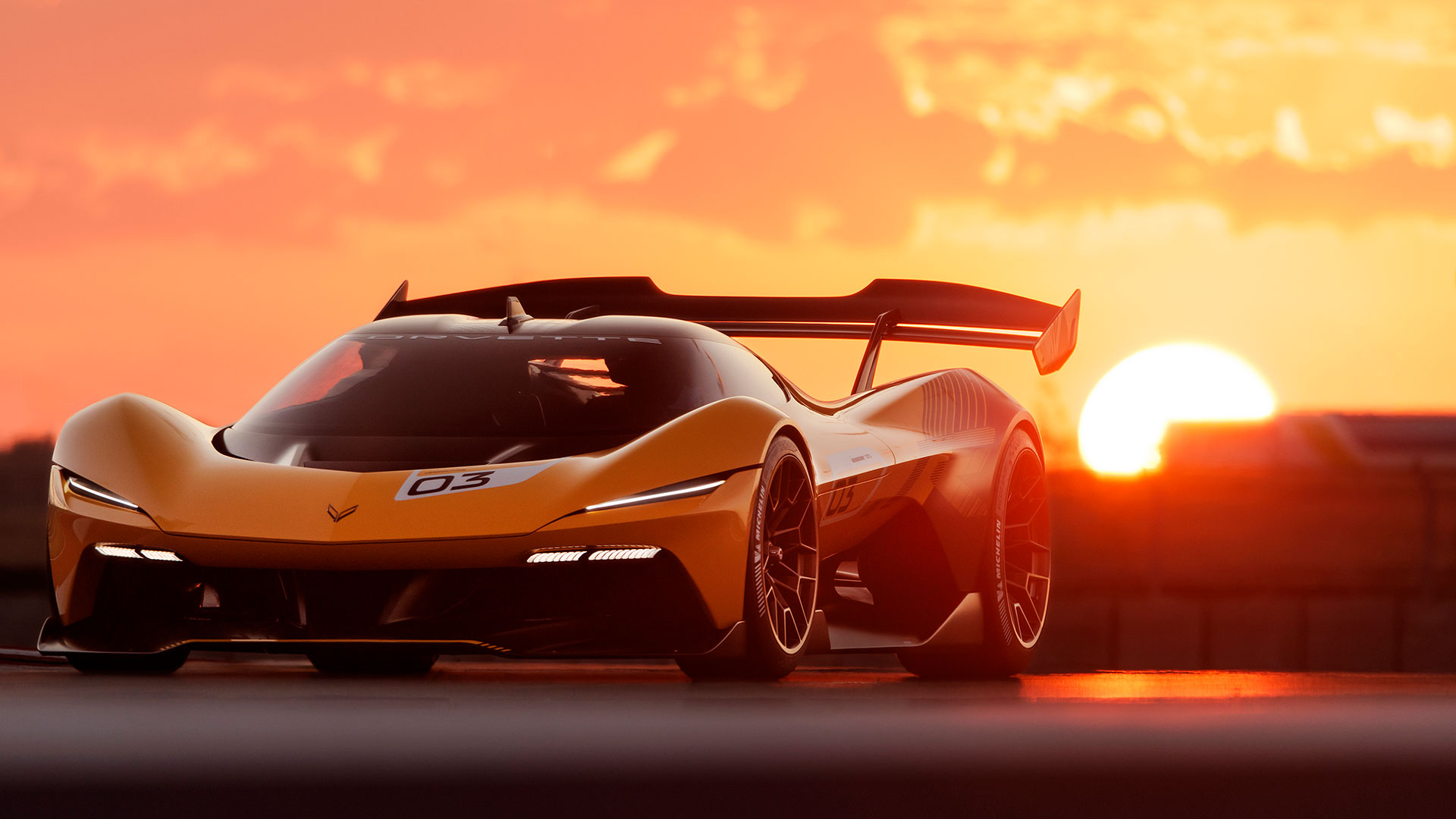
The powertrain concept blends combustion drama with electrified thrust. A mid-mounted, 2.0-liter, twin-turbo, dual-overhead-cam V8 revving to 15,000 rpm makes up to 900 horsepower and drives the rear wheels through an 8-speed dual-clutch transmission. Three electric motors, two up front and one integrated with the gearbox, supply instant torque and help push total system output to a claimed 2,000 horsepower. Chevrolet says the V8 would run on renewable e-fuel.
Chevrolet worked with Polyphony Digital to translate the design studies into drivable virtual cars. Detailed chassis, aero, and drivetrain blueprints underpinned the modeling, and both the CX and the CX.R Vision Gran Turismo are scheduled to arrive in Gran Turismo 7 later this month, giving fans a first-person look at Corvette’s evolving design language.